


As businesses adapt to flexible and hybrid work models, professionals are increasingly choosing between virtual offices and physical coworking spaces. Both options offer flexibility and cost efficiency compared to traditional offices, but they serve different business needs. Understanding their differences can help you make the right choice for your work style and growth goals.
What Is a Virtual Office?
A virtual office provides a professional business address and essential office services—without requiring a physical workspace. It’s ideal for businesses that operate remotely but still want a credible presence.
Key Benefits of Virtual Offices:
Professional business address for registration and branding
Mail handling and call forwarding services
Low operational costs
Ideal for remote teams and solo entrepreneurs
No long-term office lease commitments
Limitations:
No physical workspace for daily operations
Limited face-to-face collaboration
Not suitable for teams needing regular meetings
What Is Physical Coworking?
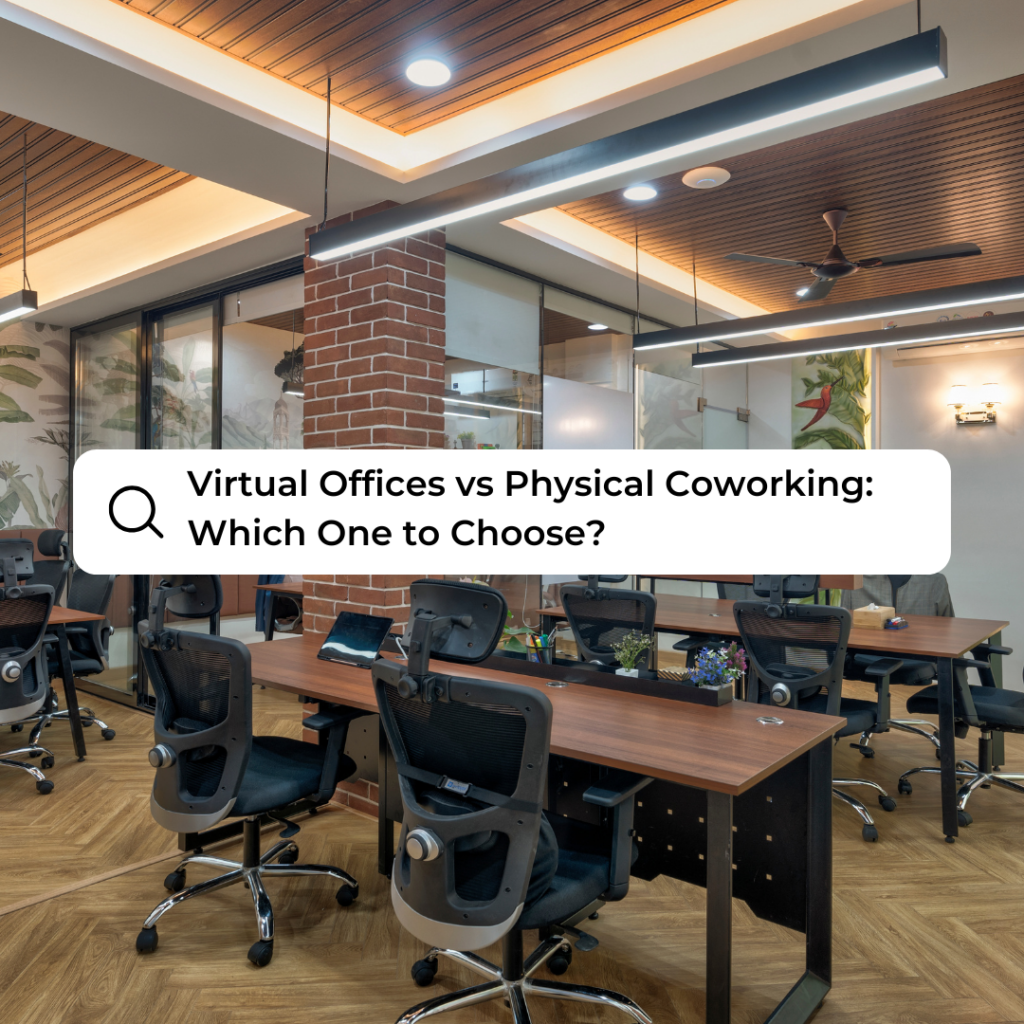
A physical coworking space offers a shared, fully equipped office environment where individuals and teams work alongside other professionals. It combines flexibility with community and collaboration.
Key Benefits of Physical Coworking:
Dedicated desks, private cabins, and meeting rooms
High-speed internet and office infrastructure
Networking and collaboration opportunities
Structured work environment for higher productivity
Access to amenities like power backup, pantry, and events
Limitations:
Higher cost than virtual offices
Commute required
May not be ideal for fully remote businesses
Choosing Based on Your Business Needs
Choose a Virtual Office if:
You work remotely or travel frequently
You need a business address for registration or compliance
Your team operates fully online
You want the lowest-cost office solution
Choose Physical Coworking if:
You value in-person collaboration and networking
You need meeting rooms and daily workspaces
You want a professional environment outside your home
You’re scaling your team or meeting clients regularly
Can You Combine Both?
Many modern businesses adopt a hybrid approach—using a virtual office for registration and branding while accessing physical coworking spaces when needed. This model offers maximum flexibility without high costs.
Final Thoughts
There is no one-size-fits-all solution. Virtual offices are perfect for remote-first businesses, while physical coworking spaces are ideal for professionals who thrive on collaboration, structure, and community. The right choice depends on how you work today—and how you plan to grow tomorrow.
By evaluating your workflow, team size, and business goals, you can choose a workspace solution that supports productivity, professionalism, and long-term success.