


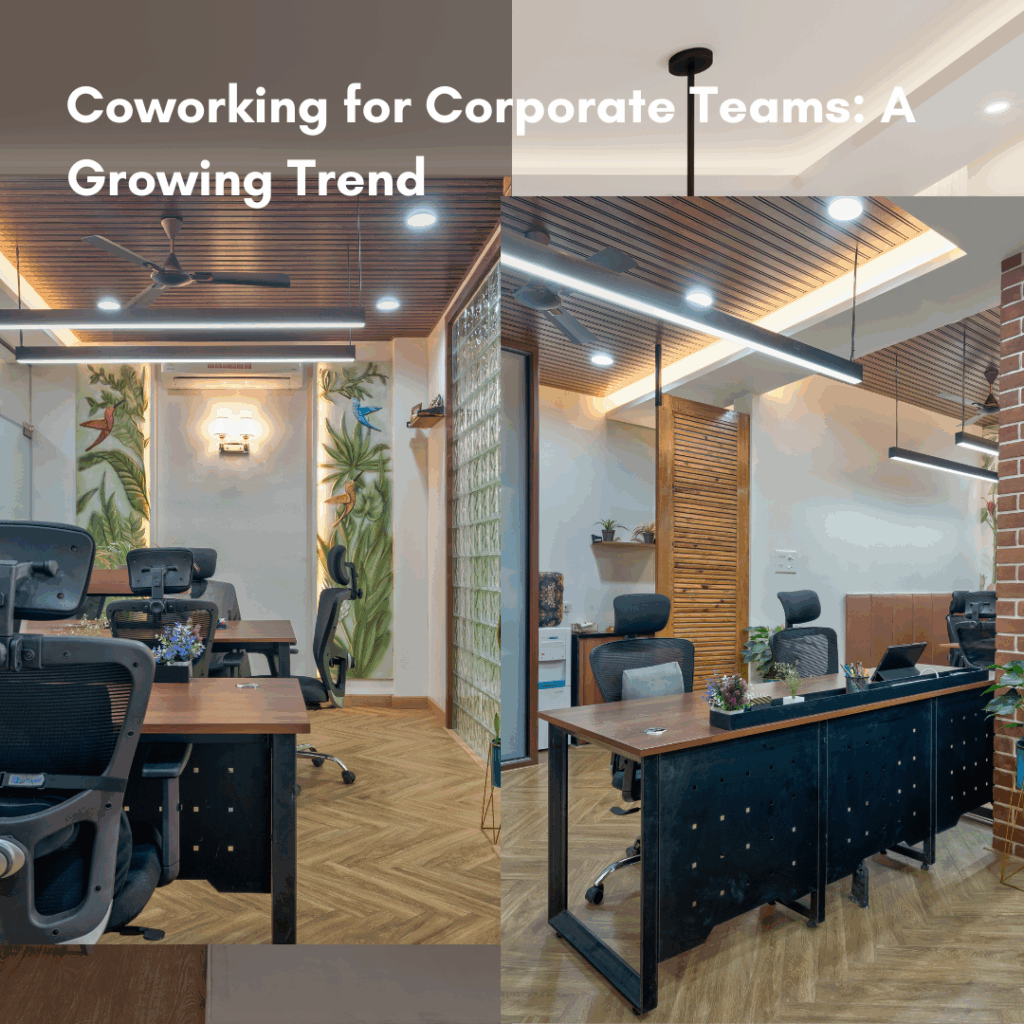
Introduction
In recent years, coworking spaces have evolved far beyond being just hubs for freelancers and startups. Today, large and mid-sized corporate teams are increasingly embracing the coworking model—and for good reason. With flexibility, cost-efficiency, and access to a vibrant professional community, coworking spaces are proving to be a strategic solution for corporations adapting to modern work dynamics.
Whether it’s satellite offices, hybrid workforces, or project-based teams, coworking is rapidly becoming a preferred choice for forward-thinking companies.
- The Shift in Corporate Work Culture
The global shift to hybrid and remote work models has challenged traditional office setups. Corporates are rethinking the need for large, fixed office spaces and instead exploring more agile and adaptive workspace models.
Coworking spaces offer corporate teams the ability to:
Scale up or down based on team size
Operate in multiple cities without investing in long-term leases
Offer employees flexibility in where and how they work
This marks a major cultural shift—from rigid office routines to more dynamic, collaborative environments.
- Benefits of Coworking for Corporate Teams
✅ Flexibility & Scalability
Companies no longer need to commit to long-term leases or expensive infrastructure. Coworking spaces provide customizable solutions—from private cabins to full-floor offices—that can grow with your team.
✅ Cost Efficiency
With utilities, maintenance, internet, and amenities included, coworking drastically cuts down on operational costs. Plus, companies only pay for what they use.
✅ Employee Satisfaction
Modern professionals value work-life balance, collaboration, and vibrant workspaces. Coworking environments are often more inspiring than traditional corporate offices, leading to higher productivity and employee morale.
✅ Access to Talent & Innovation
Sharing space with startups, freelancers, and creatives can spark new ideas and even open doors for partnerships, recruitment, or innovation.
- Popular Use Cases for Corporates in Coworking Spaces
Satellite offices for regional teams
Temporary spaces for project-based or seasonal teams
Innovation hubs to encourage cross-functional collaboration
Client-facing offices in premium locations
Remote work pods for employees who prefer structured settings over home offices
- What Corporates Should Look for in a Coworking Space
When choosing a coworking partner, corporate decision-makers should evaluate:
Security & data privacy protocols
Customizable private office options
High-speed internet & reliable IT support
Conference rooms and client meeting areas
Branding opportunities within the space
Location accessibility for team members
- Why Pune is an Ideal City for Corporate Coworking
Pune, with its booming tech parks, educational institutions, and startup ecosystem, is an ideal city for corporate teams to adopt coworking. It offers:
A large talent pool
Affordable commercial real estate
Emerging business clusters
High demand for hybrid work models post-pandemic
Many coworking spaces in Pune are already equipped to cater to large teams and corporate clients with enterprise-level infrastructure.
Conclusion
As the future of work continues to evolve, coworking for corporate teams is no longer a trend—it’s a smart, strategic move. Companies that embrace this shift can not only reduce costs and increase flexibility but also boost employee satisfaction and stay ahead of the curve.
If you’re a corporate team looking for a coworking solution in Pune, explore our tailored office plans designed for growth, collaboration, and performance.
At Mushroom Space, we’re seeing a growing number of corporate teams choosing coworking over traditional office setups. In this blog, we explore why flexible workspaces are becoming a smart, scalable solution for modern companies—offering flexibility, cost-efficiency, and a more dynamic work culture. Discover how your corporate team can thrive in a coworking environment.